Six × Seven
A multiplication-tables trainer that doesn't stop at flashcards. Ten practice modes take you from your first "2 × 3" to answering blind against the clock — and you don't move to the next level until you've actually proven you know the last one.
"Build Your Future With Mathematics" — the app's own splash-screen tagline
Practice Until It's Automatic — Then Prove It
Most times-tables apps are one quiz mode wearing different skins. Six × Seven is built around a simple idea instead: kids don't get faster at multiplication by seeing more questions, they get faster by mastering one skill solidly enough to unlock the next.
The app is organized as a ladder of ten categories, each one a different way of testing the same multiplication facts — starting with gentle, ordered multiple choice and ending in "blind" typed answers against a ticking clock. Every level tracks your best score, and you need at least 750 out of a possible 1000 to unlock what comes next. Nothing is gated by time or payment — only by whether you've actually got the facts down.
It's fast to pick up — tap a category, tap a level, start answering — and has real depth underneath for anyone who wants to build genuine fluency: a scoring system that rewards speed without punishing you for reading the question, a "Configure Your Own Game" builder for practicing exactly what you want, and per-level history graphs so progress (or backsliding) is visible over time.

What It Does
Six real, shipped features — not roadmap copy.
Progressive Mastery, Not Just Practice
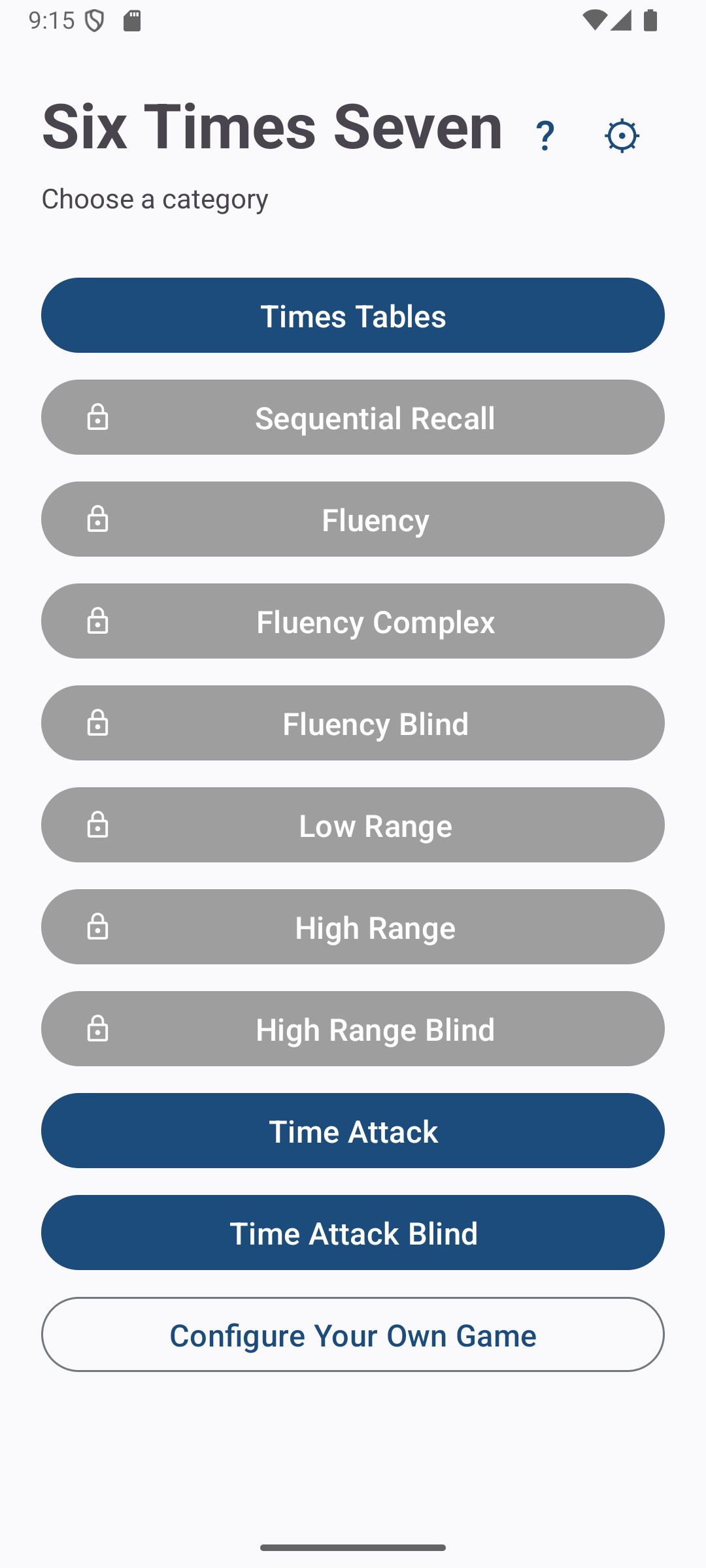
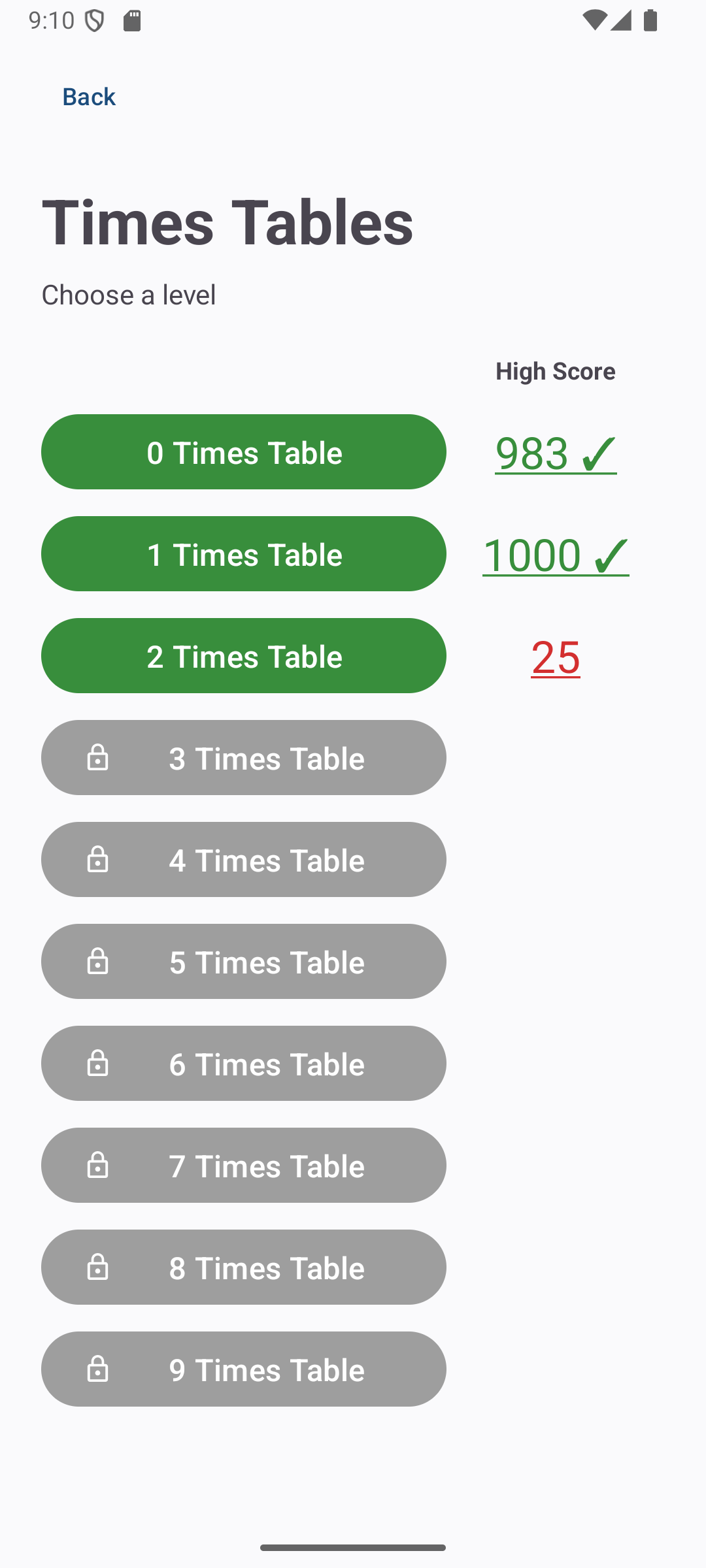
Ten categories run in a fixed order, from ordered multiple-choice all the way to typed, blind, time-pressured recall. Score at least 750/1000 on a level to unlock the next one.
Two Ways to Answer, Four Ways to Play
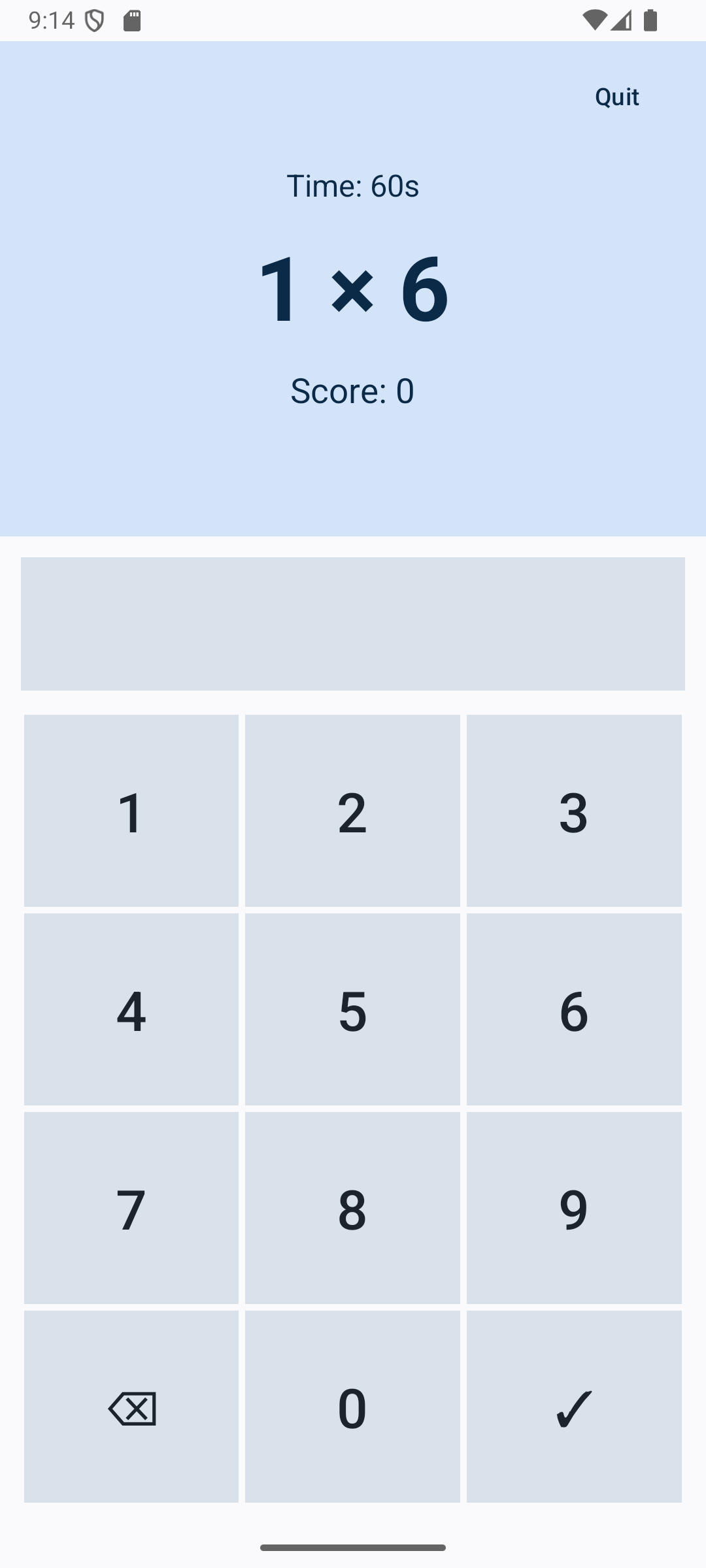
Answer by tapping one of ten multiple-choice tiles, or go "blind" and type the answer on a number keypad. Play a fixed 10/15/20-question set, or race the clock in Time Attack.
A Scoring System That Rewards Real Fluency
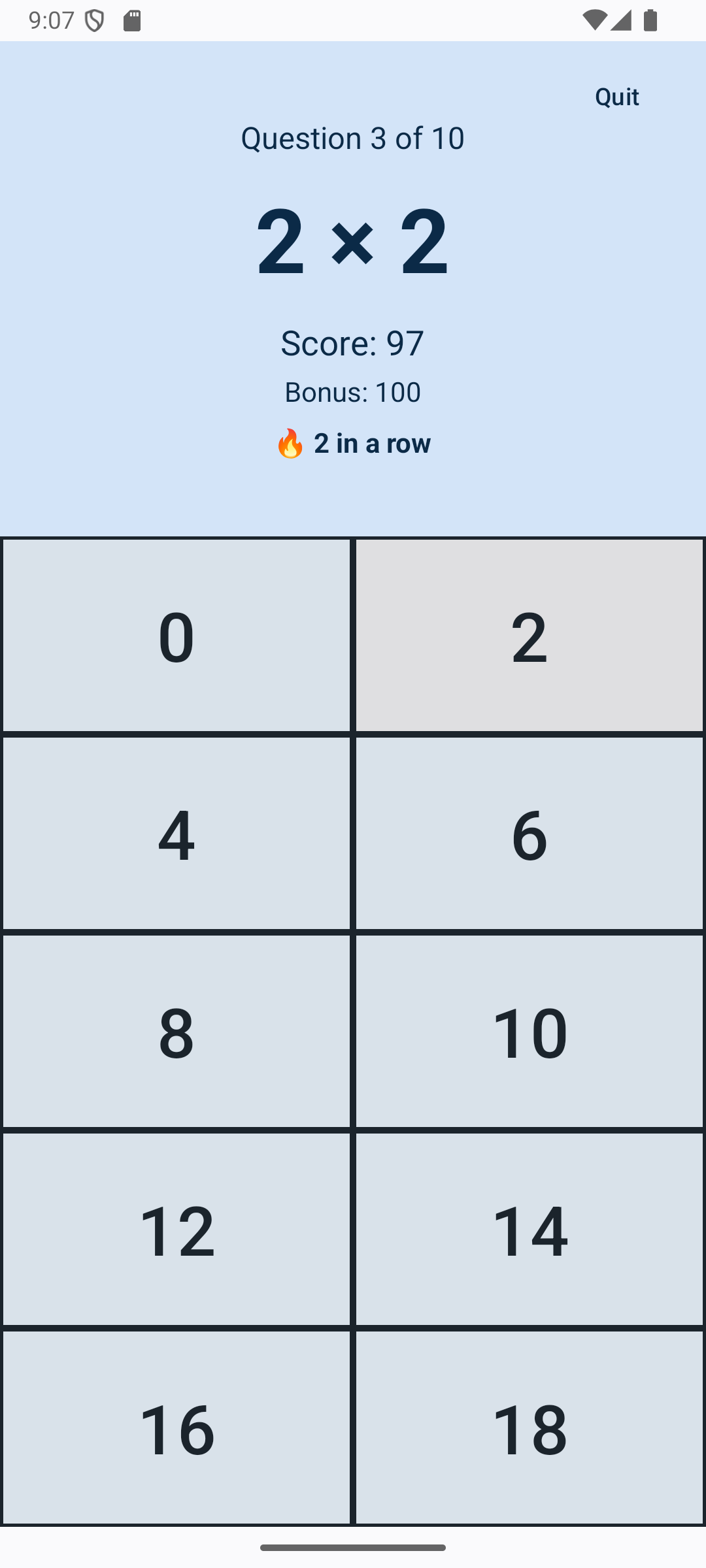
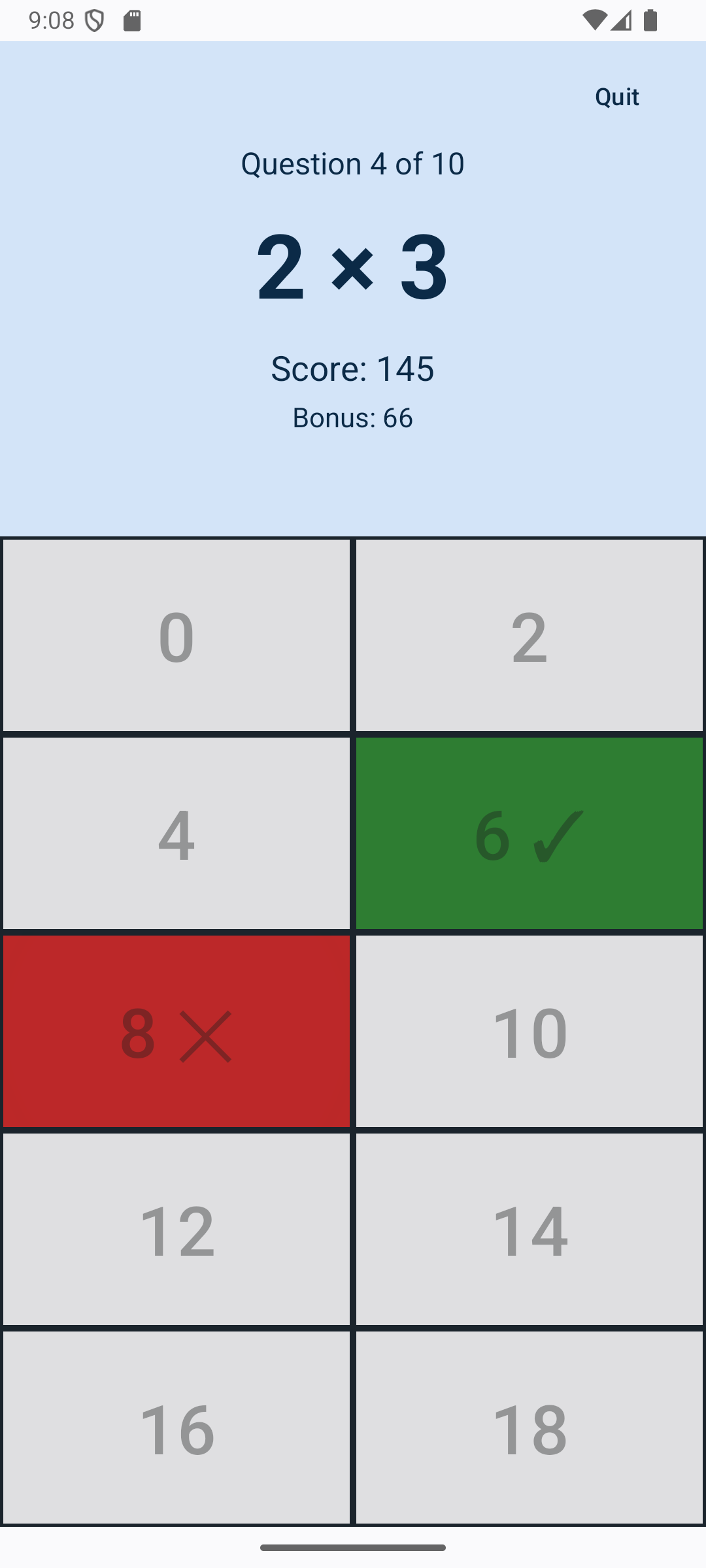
Every question starts worth 100 points, holds for a short grace period, then decays the longer you take — so instant recall pays off without punishing normal reading time.
Build Your Own Practice Session
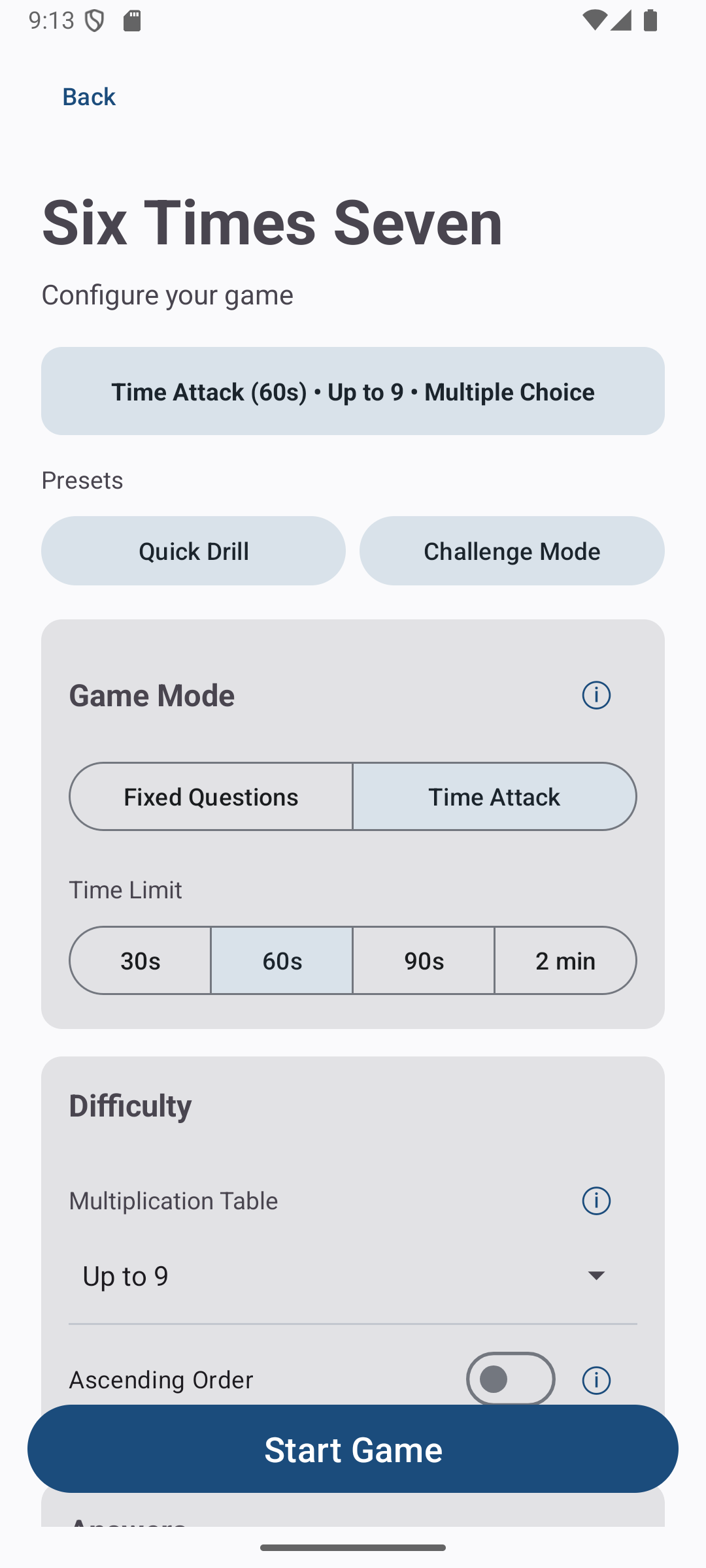
The Configure Your Own Game screen lets you set the question count, factor range, answer order, and input style yourself — or jump-start with a Quick Drill or Challenge Mode preset.
Progress You Can Actually See
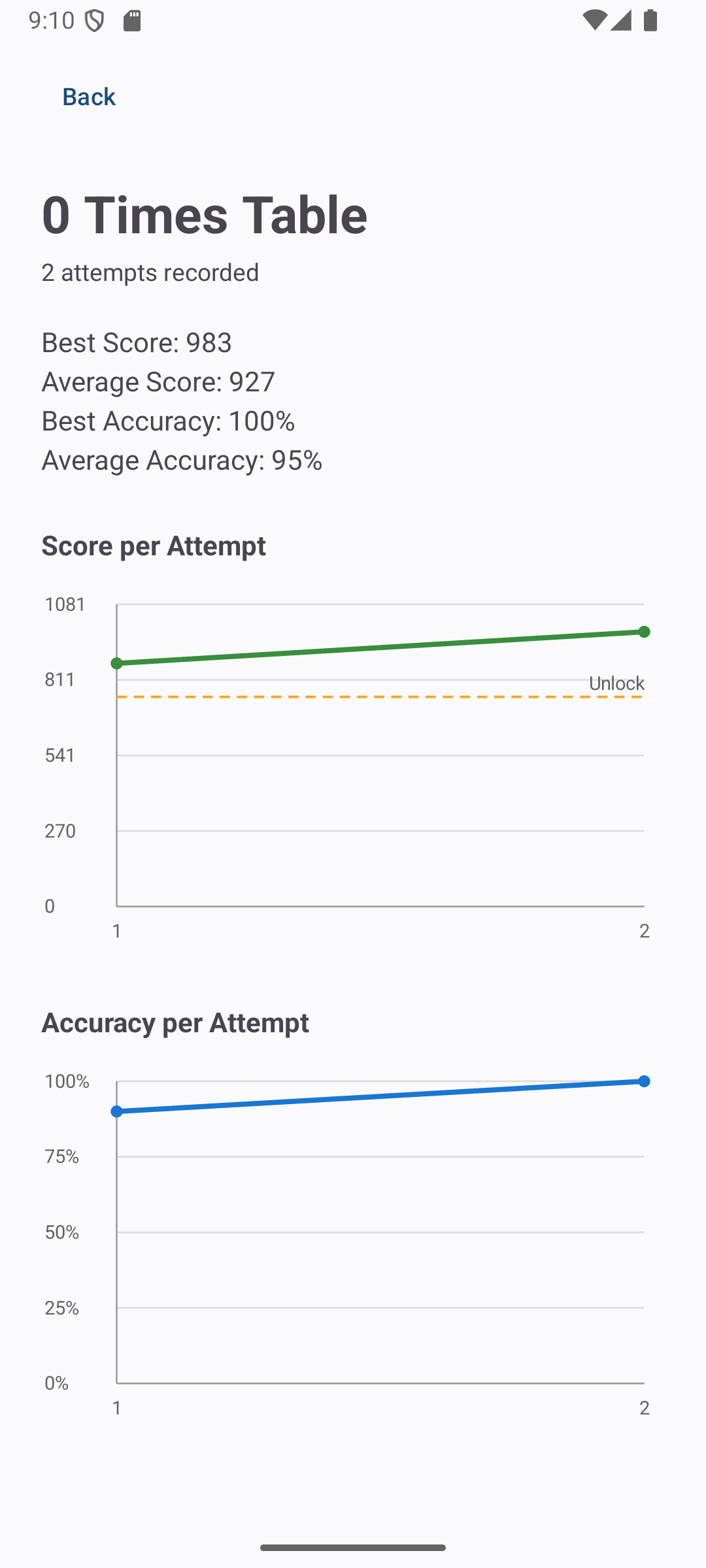
Every attempt on every level is saved on-device. Tap any high score for a full history: best and average score, best and average accuracy, and line graphs of both over time.
Mistakes Become the Next Thing You Practice
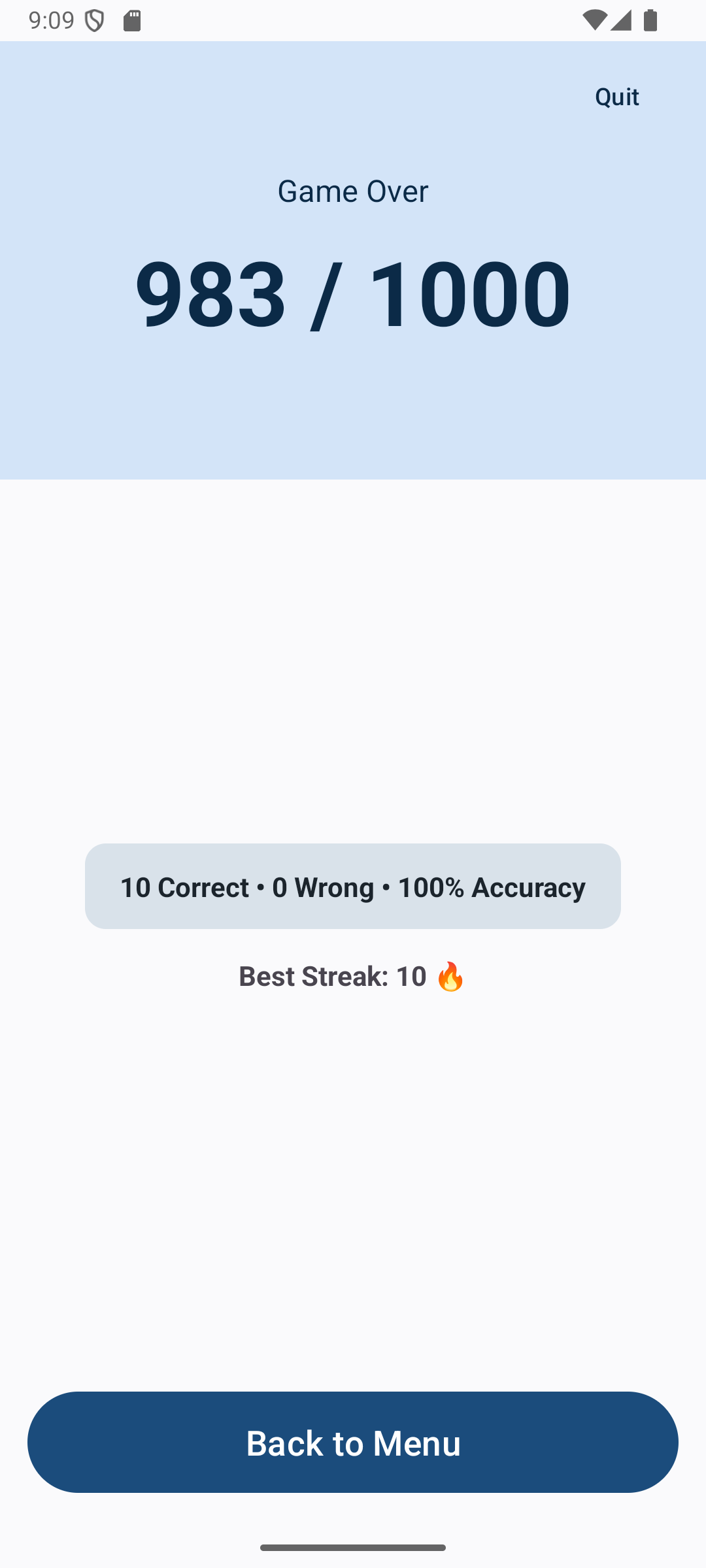
Every game ends with a clear recap — correct vs. wrong, accuracy, best streak — and a review list of exactly which facts you missed, in the order you missed them.
One Category at a Time
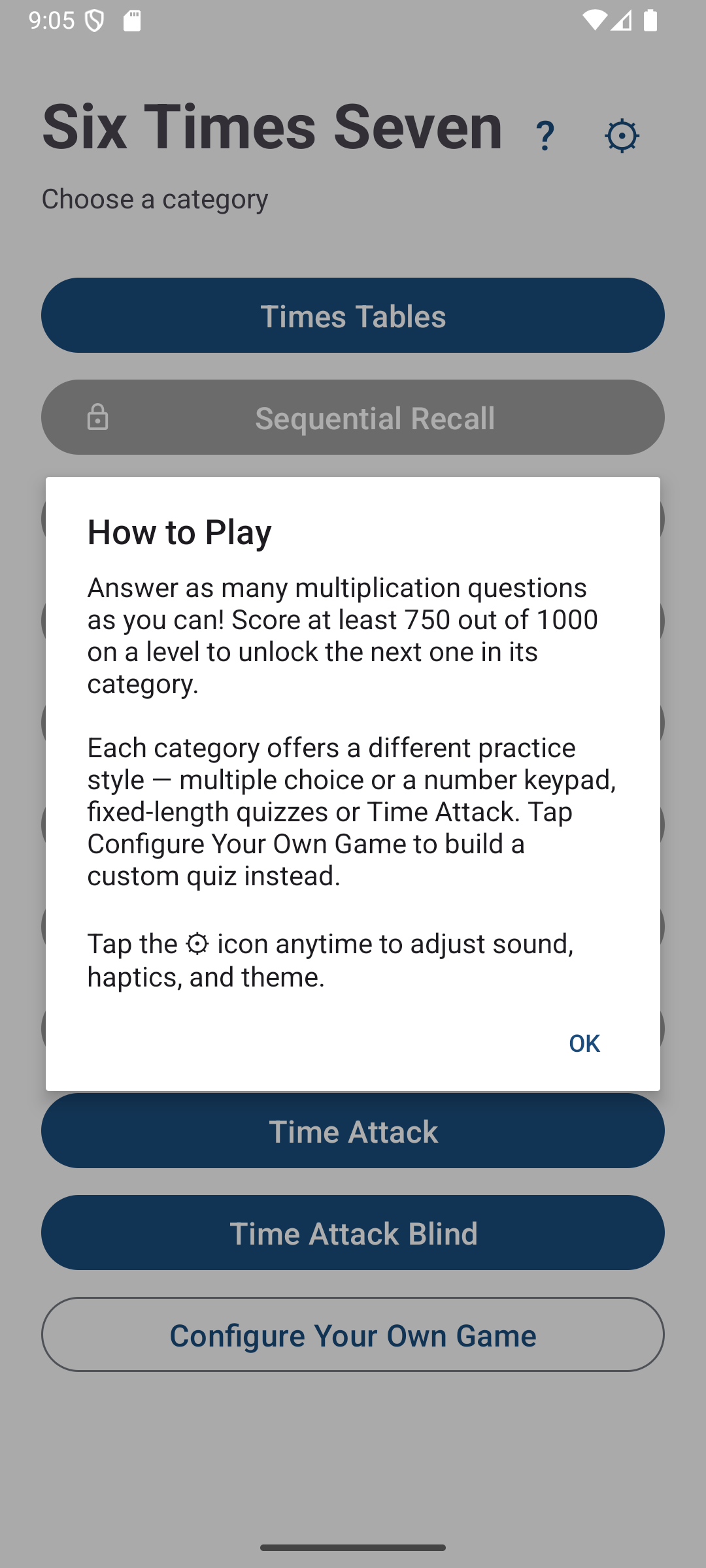
Every category holds ten levels — one per times table, 0 through 9 (or, for the range-based categories, one mixed-difficulty level). Score 750+ on a level and the next one unlocks. A first-run "How to Play" dialog walks new players through scoring, categories, and the settings gear before they start.
Times Tables
Multiple choice, answers shown low-to-high as clean multiples of the number you're drilling. The on-ramp.
Sequential Recall
Same gentle multiple-choice format, but the questions come in random order instead of 0×N to 9×N in sequence, so you can't just memorize a pattern.
Fluency
Wrong answers are no longer tidy multiples — they're random plausible numbers, so recognizing the shape of the right answer stops being enough.
Fluency Complex
Wrong answers become genuine near-misses — one off, or a row or column away in the times table — demanding real precision.
Fluency Blind
Same near-miss difficulty as Fluency Complex, but typed on a keypad instead of picked from options. No visual crutch.
Low Range
30 mixed multiple-choice questions pulling from the 1–5 times tables.
High Range
30 mixed multiple-choice questions across the full 1–9 grid.
High Range Blind
The same full 1–9 grid, 30 questions, typed answers only.
Time Attack
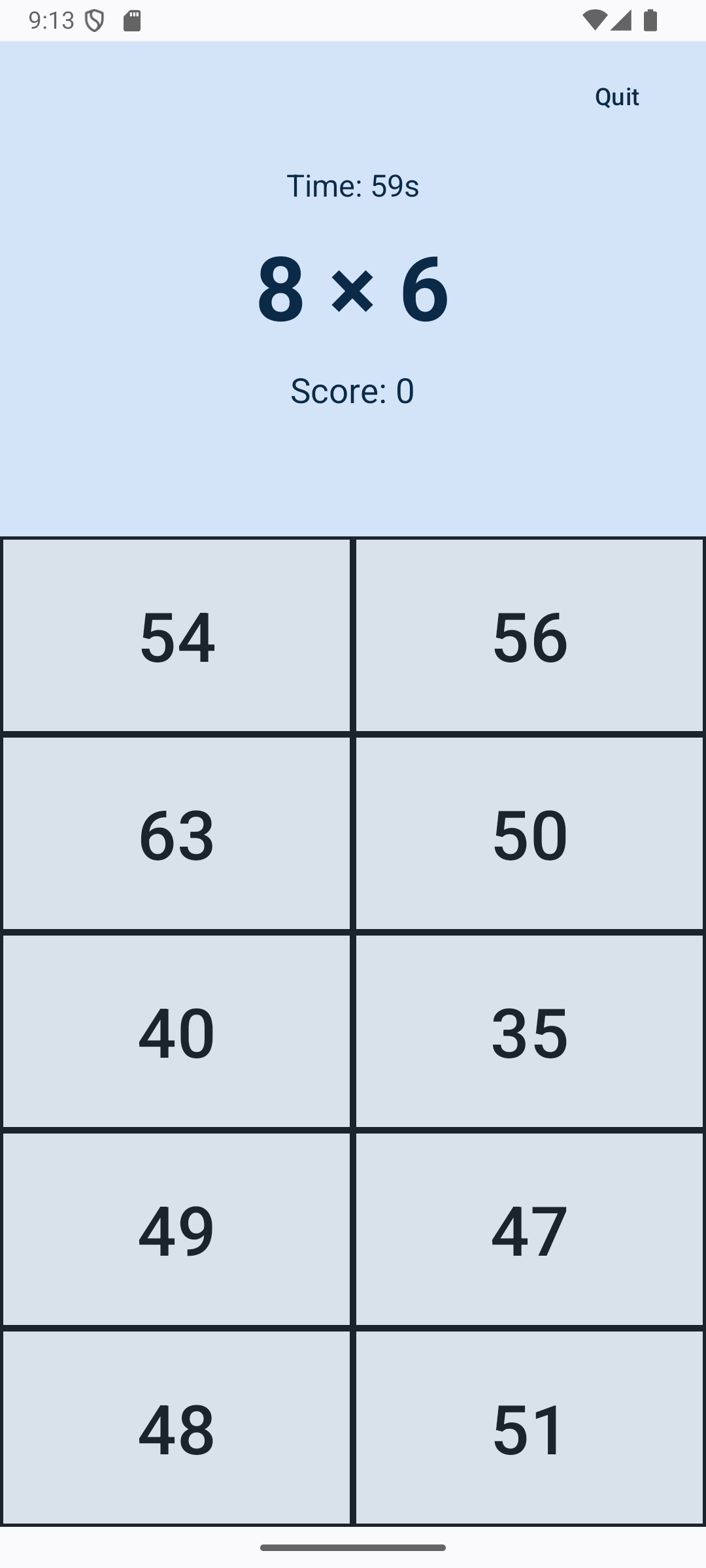
Standalone and always unlocked: 60-second sprints, one for the 1–5 range and one for the full 1–9 range, multiple choice.
Time Attack Blind
The same two 60-second sprints, typed answers only. The final exam.
The two Time Attack categories sit outside the unlock chain entirely — they're always available and never required to progress, so speed-focused players can jump straight in.
A Look Inside
Real screenshots, captured on an Android emulator — not mockups.
Skill Is the Only Key
Mastery-Gated Progression
A level unlocks only after the one before it is actually beaten (750/1000+), not after a timer or a purchase.
Speed Rewarded, Guessing Punished
The exponential decay bonus rewards instant recall without punishing normal reading time, and the wrong-answer penalty is calibrated high enough that blind guessing never beats genuinely trying.
Built-In Reflection
Every game ends by telling you exactly what you got wrong, not just your score — turning each session into a targeted practice list instead of a number you forget five minutes later.
Total Privacy, By Design
No account, no ads, no analytics SDKs, no internet permission at all. Every score and setting lives in local storage on the device and never leaves it.
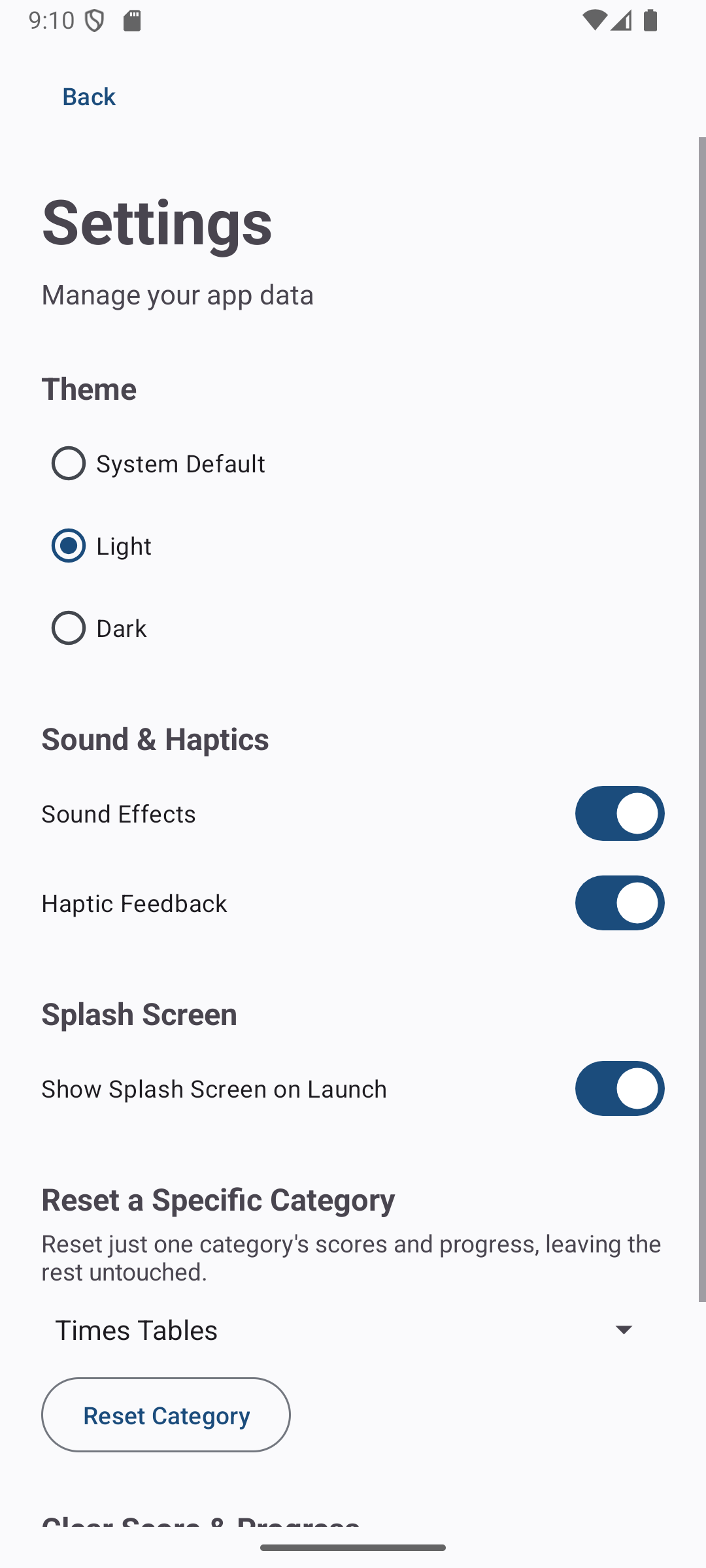
Every setting — including a full progress reset — stays on-device.
No ads, no accounts, no in-app purchases — if Six × Seven has been useful, you can support future TRK Studios apps directly: